
The Power of Holding Hands: How Parent-Toddler Programs Ease Early Separation Anxiety
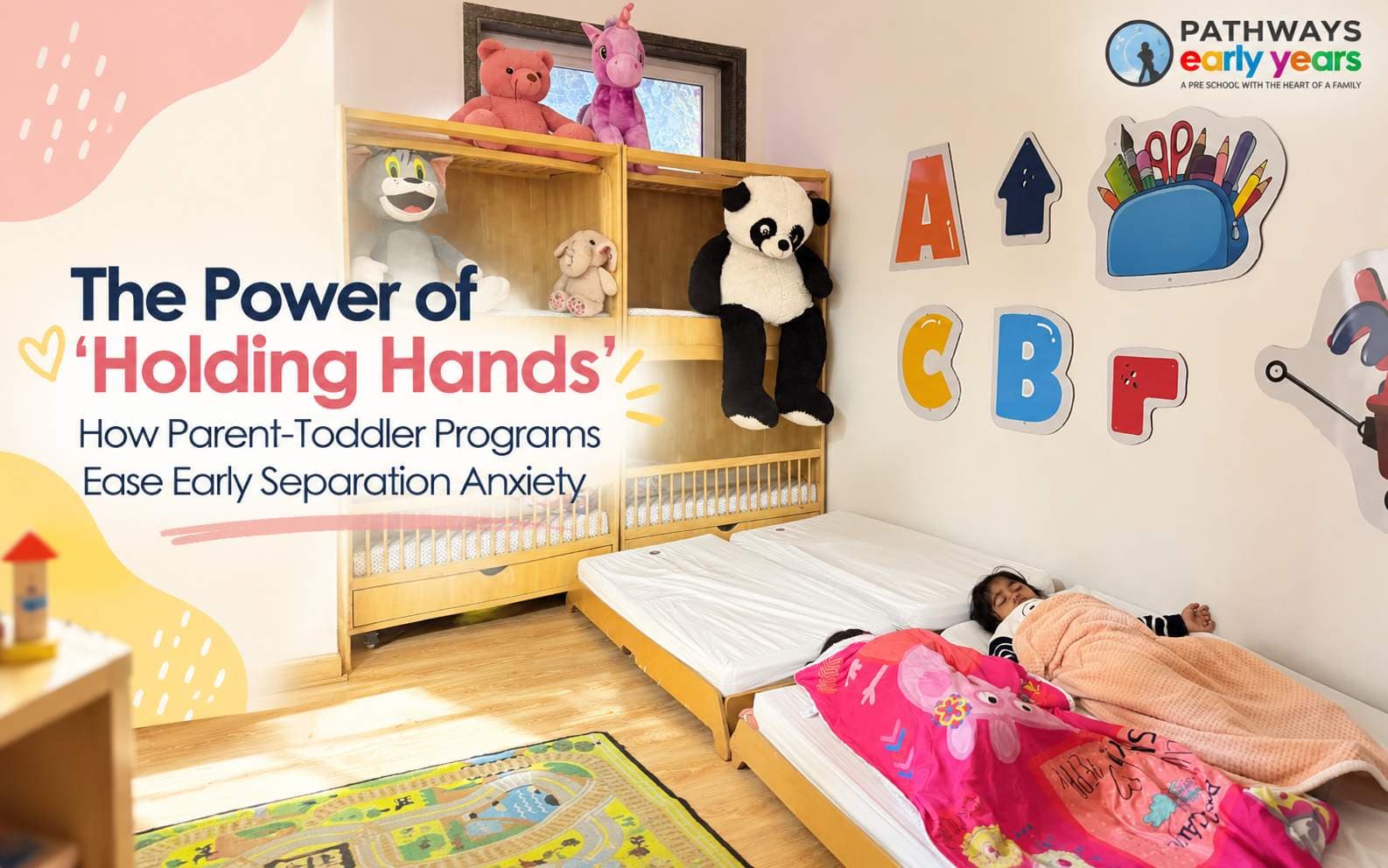
Toddler separation anxiety is a natural part of growing up. Discover how parent-toddler programs, gentle routines, and the Holding Hands Programme at Pathways Early Years help children build confidence and transition smoothly into preschool.
The first time your toddler lets go of your hand to explore a new environment can feel like a big milestone. One moment, they are excitedly reaching for colourful toys. The next, they realise you are a few steps away and rush back into your arms.
For many parents, this familiar situation raises an important question: Will my child feel comfortable when it is time to start preschool?
Starting preschool is one of the earliest significant transitions in a child’s life. New faces, unfamiliar surroundings, different routines, and time away from parents can sometimes feel overwhelming. This is where toddler separation anxiety becomes an important part of understanding early childhood development.
Fortunately, children do not have to navigate this transition all at once. Parent-toddler programs create opportunities for young children to experience new environments while enjoying the reassurance of a familiar caregiver.
At Pathways Early Years, Shalimar Bagh, the Holding Hands Parent–Child Programme supports this journey through shared exploration, emotional security, and gradual independence.
Key Takeaways
· Separation anxiety is a natural developmental stage. Toddlers may feel distressed when separated from parents, especially during preschool transitions.
· Gradual transitions help build confidence. Familiar caregivers can make new environments less overwhelming.
· Parent-toddler programs support emotional security through guided play, familiar routines, and positive interactions.
· Consistent goodbyes, gentle reassurance, and communication with educators can support smoother adjustment.
· Every child adjusts at their own pace and may need different levels of patience and support.
· Holding Hands encourages early independence, social interaction, and emotional confidence.
What Is Toddler Separation Anxiety?
Toddler separation anxiety is the distress a young child may experience when separated from a parent or another trusted caregiver. It is a common part of early childhood development, particularly during infancy and the toddler years.
As children develop stronger emotional attachments, they become increasingly aware of the people who provide comfort and security. When a familiar caregiver leaves, even briefly, a child may feel uncertain about what happens next.
Common signs of separation anxiety in toddlers include:
· Crying when a parent leaves the room.
· Clinging to caregivers in unfamiliar surroundings.
· Hesitating to interact with new adults.
· Becoming upset during preschool drop-offs.
· Seeking extra reassurance during changes in routine.
· Experiencing temporary changes in sleep or behaviour.
These responses do not necessarily mean that a child is unprepared for preschool. Instead, they often reflect a developing emotional attachment and a need for reassurance. The goal is not to eliminate every moment of separation anxiety but to help children gradually feel secure, supported, and confident when exploring beyond home.
Why Does Separation Anxiety Increase During Preschool Transition?
The transition from home to preschool introduces several unfamiliar experiences simultaneously. A toddler accustomed to spending most of the day with family may suddenly encounter a classroom filled with new people, activities, and expectations.
1. Unfamiliar Environments Can Feel Overwhelming
Young children find comfort in familiar surroundings. At home, they recognise the voices, spaces, objects, and routines that shape their daily experiences. A preschool classroom introduces new toys, furniture, sounds, and people. Even an inviting environment may initially feel unfamiliar. Children need opportunities to explore gradually before associating the space with comfort and enjoyment.
2. Toddlers Are Still Developing Emotional Regulation
Toddlers experience strong emotions but are still learning how to understand and manage them. A child may be excited about new toys while also worried about being away from a parent. Because young children cannot always express these feelings verbally, they may cry, cling, or hesitate. Patient educators and caregivers can acknowledge feelings and offer calm reassurance.
3. New Routines Require Adjustment
Preschool introduces group activities, snack times, classroom transitions, and interactions with educators. Adjusting to them takes time. Predictable activities help children understand what comes next, which can gradually reduce uncertainty.
4. Trust Takes Time to Develop
A toddler who feels secure with a parent may not immediately feel comfortable with an unfamiliar teacher. Trust develops through repeated positive interactions. Warm, consistent responses help children recognise educators as reliable sources of support.
How Do Parent-Toddler Programs Help Ease Separation Anxiety?
A parent-toddler program lets young children participate in guided learning experiences alongside a parent or caregiver. Rather than expecting immediate separation, it creates a gradual bridge between the security of home and the independence associated with preschool.
1. Creating Familiarity in a New Environment
Imagine a toddler entering a classroom for the first time. Instead of immediately saying goodbye, the parent remains nearby while the child explores toys and activities. A familiar presence provides reassurance. With repeated positive experiences, unfamiliar surroundings may gradually become more comfortable.
2. Encouraging Independence Without Pressure
Independence develops through small everyday experiences. A child may first watch others play from beside a parent, later reach for a toy alone, and eventually join an activity with an educator. These small changes are meaningful progress. Children can explore at their own pace.
3. Building Positive Relationships With Educators
Consistent interaction with warm, responsive educators can help toddlers develop trust beyond their immediate family. Patient guidance, encouragement, and reassurance help children recognise familiar adults in the learning environment.
4. Supporting Early Social Interaction
Parent-toddler activities offer chances to observe peers, play alongside them, communicate needs, and explore shared materials. These experiences gradually build familiarity with social and group settings.
5. Introducing Predictable Learning Routines
Welcome songs, sensory activities, guided play, and familiar closing rituals help children recognise patterns. Over time, predictable experiences can make a learning environment feel more reassuring.
The Role of Holding Hands in Building Emotional Confidence
The name “Holding Hands” reflects an important principle of early childhood development: children often develop confidence through secure, supportive relationships. Holding hands does not prevent independence. It offers reassurance while children discover what they can achieve themselves.
At Pathways Early Years, Shalimar Bagh, the Holding Hands Parent–Child Programme introduces young children to shared learning experiences alongside caregivers. The programme supports social, emotional, physical, and language development through age-appropriate activities in a nurturing environment.
Age-Appropriate Learning Experiences
Programme | Age Group | Session Duration |
Level 1 | 6–12 months | 60 minutes, twice weekly |
Level 2 | 12–18 months | 60 minutes, twice weekly |
Level 1 introduces infants to sensory exploration, early interactions, and shared activities. Level 2 encourages emerging independence, communication, social awareness, and familiarity with guided learning routines. Both levels recognise the importance of caregiver involvement.
7 Practical Ways Parents Can Ease Toddler Separation Anxiety
Alongside parent-toddler programs, everyday family routines can help children feel supported through preschool transitions.
1. Practise Short, Positive Separations
Begin with brief separations involving another trusted caregiver. Explain where you are going and return as promised. Gradually extend the time when your child becomes more comfortable.
2. Create a Consistent Goodbye Routine
A predictable goodbye might include a hug, a reassuring phrase, and a wave at the door. Keep it warm, brief, and consistent. Avoid leaving secretly, as unexpected departures may increase uncertainty.
3. Talk Positively About Preschool
Introduce preschool through simple conversations about toys, stories, and other children. Avoid promising there will never be difficult moments; explain that caring teachers will be there to help.
4. Read Stories About Starting School
Picture books about friendships, school, and goodbyes can introduce new experiences. Discuss how the characters feel to help children identify their own emotions.
5. Encourage Independent Play
Offer opportunities to stack blocks, arrange shapes, or choose storybooks while you remain nearby. Celebrate effort without pressuring children to work alone.
6. Maintain Familiar Daily Routines
Predictable sleep, meal, and play times create stability. Avoid making too many major changes at once just before preschool begins.
7. Communicate With Preschool Educators
Share your child’s interests, comfort routines, communication style, and responses to unfamiliar situations. Working together helps families and educators provide consistent support.
How Long Does Preschool Separation Anxiety Last?
There is no fixed timeline for overcoming preschool separation anxiety. Some toddlers feel comfortable after several visits, while others need weeks or longer. Temperament, developmental stage, experiences with caregivers, and the consistency of the learning environment can all play a role.
Look for gradual progress: exploring classroom materials, accepting reassurance from an educator, showing curiosity about other children, or recovering more quickly after goodbye. Occasional difficult mornings can occur even after a child has started settling in.
If distress remains intense, persists for an extended period, or significantly interferes with daily life, discuss your concerns with a paediatrician or qualified child-development professional.
Why Emotional Readiness Matters for Preschool Transition
Parents often associate preschool readiness with recognising colours, counting numbers, or identifying letters. These skills are part of early learning, but emotional readiness matters too. Children who feel secure are better positioned to explore, communicate, and participate.
Preschool readiness includes:
· Building trust with familiar educators.
· Expressing basic needs and emotions.
· Showing curiosity about new experiences.
· Participating in simple routines.
· Developing early social relationships.
· Exploring independently with appropriate support.
These are not strict requirements to complete before starting school. Children develop them gradually through meaningful experiences. The most useful question may be not “How much does my child already know?” but “Does my child feel supported enough to explore and learn?”
Supporting a Smooth Preschool Transition in Shalimar Bagh
For families exploring early childhood education in Delhi, choosing a nurturing environment is an important part of preparing for preschool. A supportive setting recognises that every child’s adjustment looks different.
Parents considering a preschool in Shalimar Bagh can observe classroom interactions, ask about settling-in approaches, and discuss individual needs with educators. The Holding Hands Parent–Child Programme at Pathways Early Years offers families an opportunity to experience a learning environment together and gradually become familiar with guided activities and social interaction.
Conclusion: Sometimes, Confidence Begins With Holding Hands
Every child’s first step towards independence begins with a foundation of trust. Some toddlers explore a classroom immediately; others need a reassuring hug, a familiar voice, or the comfort of holding a parent’s hand. Neither journey is more successful than the other.
What matters is allowing children to develop confidence at their own pace while providing emotional security. Parent-toddler programs can support the journey through shared exploration, guided learning, and positive relationships.
At Pathways Early Years, Shalimar Bagh, the Holding Hands Parent–Child Programme reflects this gentle approach to early development. Sometimes the first step towards independence begins with knowing someone is there to hold your hand.
Explore the Holding Hands Programme or contact Pathways Early Years to learn more about early learning opportunities for your child.
About the Author
Pathways Early Years Team
Frequently Asked Questions
It is the distress children may experience when separated from a parent or trusted caregiver. It can become more noticeable when starting preschool or entering unfamiliar situations.
Practise short separations, use consistent goodbye routines, speak positively about school, and communicate with educators. Parent-toddler programs may also support familiarisation.
It commonly begins during the second half of infancy and can continue through toddlerhood. Timing and intensity vary between children.
Crying can reflect discomfort with separation, unfamiliar surroundings, or changing routines. Predictability and supportive interactions can help.
They may help children explore unfamiliar settings alongside caregivers, building familiarity and confidence through guided activities and routines.
It varies. Some settle quickly; others may need several weeks or longer. A supportive and consistent approach is more useful than a fixed timeline.
It is a parent-child learning programme for children aged 6–18 months that encourages emotional security, early interaction, and gradual familiarity with learning experiences.
Introduce simple routines, read preschool stories, encourage supported independent play, practise brief separations, and discuss settling-in arrangements with teachers.
Get in Touch
Still have questions? Fill out the form below and our team will get back to you shortly.